
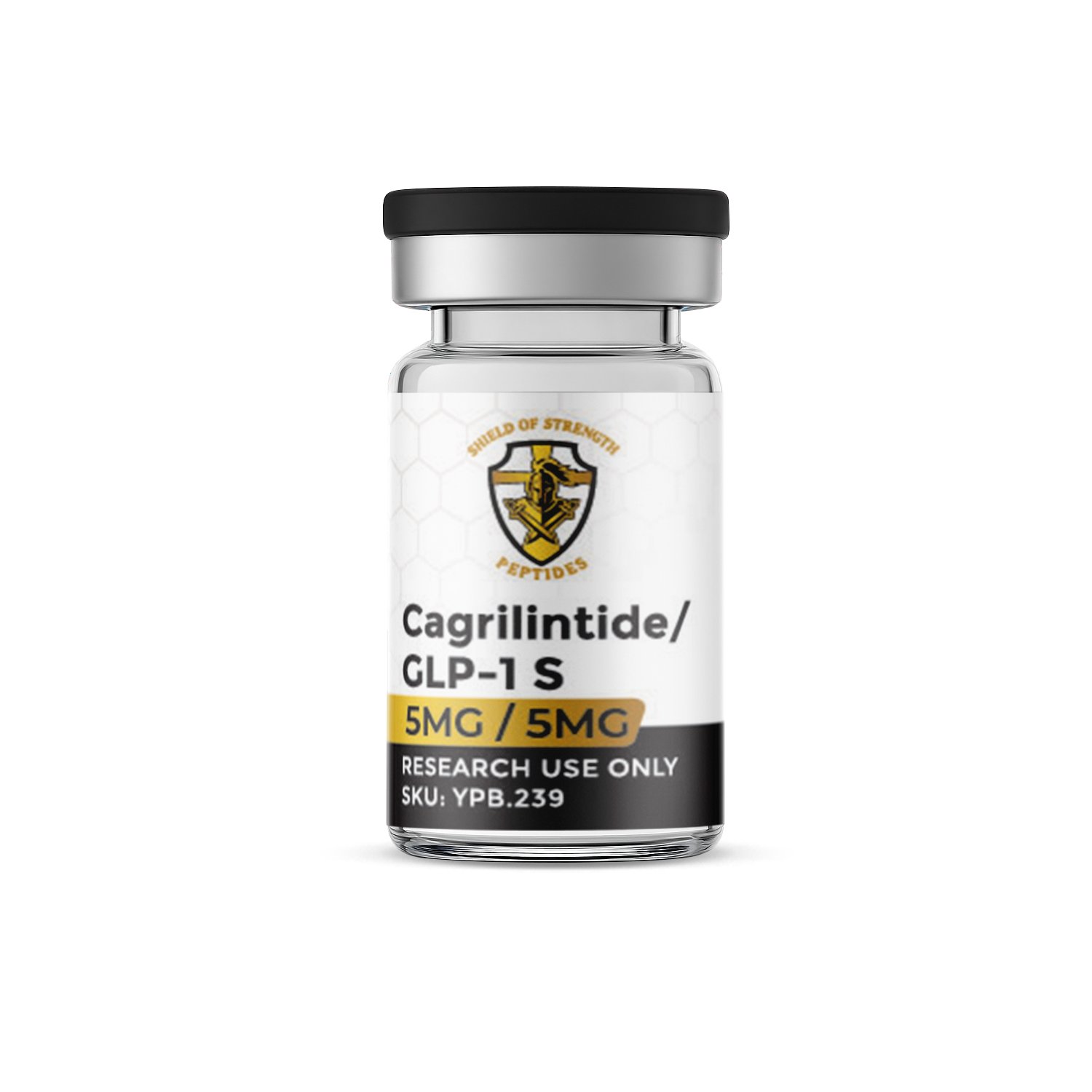
Cagrilintide GLP-1 S
This product is a synthetic analog of the glucagon-like peptide-1 receptor agonist, cagrilintide. Developed for research applications, cagrilintide is designed to interact with GLP-1 receptors, offering insights into its pharmacological potential within controlled academic and industrial investigations. The peptide is available in a 5 mg formulation, intended exclusively for use in laboratory settings.
Research Context
Cagrilintide is a derivative of GLP-1, a well-studied hormone involved in glucose metabolism, appetite regulation, and gastrointestinal motility. While clinical development for therapeutic uses has been paused or discontinued for cagrilintide in certain contexts, its structural and functional properties remain relevant in research settings. This peptide may be utilized to explore mechanisms of GLP-1 receptor activation, its potential interaction with other peptide signaling pathways, and its effects on cellular models relevant to metabolic and endocrine studies.
Research Overview
Cagrilintide is typically utilized in academic and industrial research to investigate:
- Pharmacokinetics and receptor binding properties of GLP-1 analogs.
- In vitro and in vivo models of glucose regulation and metabolic pathways.
- Potential cross-talk with other peptide hormones or receptor systems.
This peptide is often used in conjunction with other experimental tools, including receptor-binding assays, enzymatic activity assays, and animal models, to elucidate its behavior under controlled conditions.
Key Research Focus Areas
- Metabolic Research: Cagrilintide’s ability to modulate glucose homeostasis and insulin secretion can be explored in cell lines or animal models to assess its role in diabetes or related metabolic disorders.
- Gastrointestinal Function: The peptide’s impact on gut motility and appetite regulation can be examined in preclinical studies, offering insights into its potential mechanisms of action in digestive physiology.
- Signal Transduction Studies: Investigation of cagrilintide’s downstream signaling effects may help identify its interactions with second messenger systems or protein complexes in receptor-mediated pathways.
- Safety and Toxicity Profiling: Preclinical studies can evaluate the peptide’s toxicity, stability, and pharmacodynamic profile in controlled environments.
Important Safety and Compliance Note
This product is intended solely for research purposes and should only be handled by individuals with appropriate training in peptide synthesis and biohazard protocols. Improper handling, storage, or use may result in unintended exposure or contamination. Always adhere to institutional guidelines for peptide research, including proper disposal procedures for waste materials. For research use only. Not for human or animal consumption.



Reviews
There are no reviews yet.