
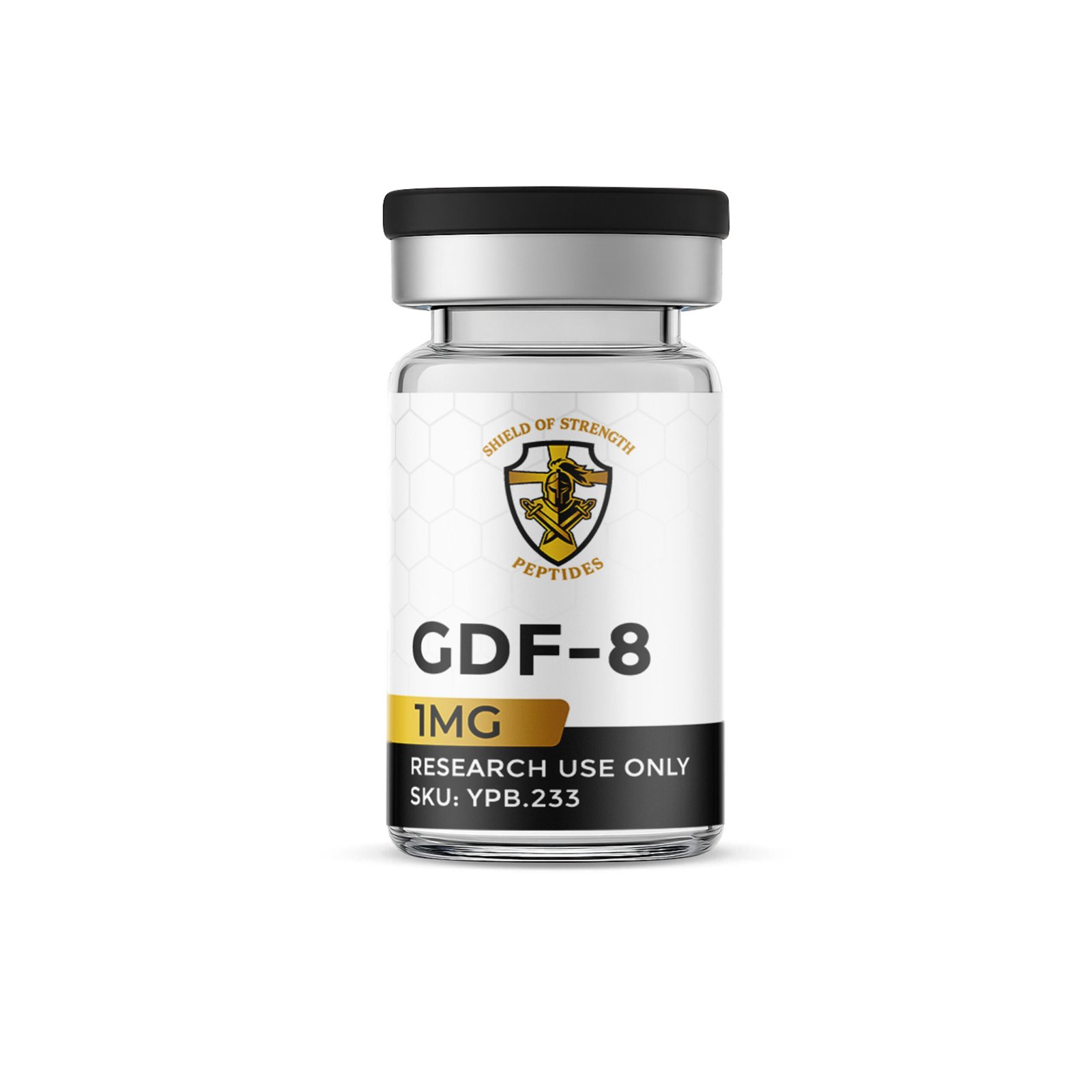
CDF-8 1MG
CDF-8 is a synthetic decapeptide designed for scientific investigation within the research community. This product is intended solely for academic, institutional, or proprietary research purposes under the supervision of qualified personnel. CDF-8 has been explored in preclinical studies for its potential role in modulating cellular signaling pathways, often associated with metabolic and homeostatic processes.
Research Context
Decapeptides, including CDF-8, have emerged as a class of molecules with potential biological activity in vitro and in animal models. They are typically designed to mimic or interact with endogenous signaling peptides, offering a novel approach to studying protein-protein interactions, receptor-ligand dynamics, or cellular regulatory mechanisms. Due to their synthetic nature, CDF-8 can be readily modified for specific research applications.
Research Overview
CDF-8 represents a simplified yet structurally diverse peptide that may serve as a probe for investigating growth factor signaling, cell cycle regulation, and metabolic homeostasis in controlled experimental settings. Preclinical studies have occasionally examined its effects on cell proliferation, apoptosis, or cytokine responses, though these findings are not yet clinically validated. The peptide’s short length (10 amino acids) enhances stability and cost-effectiveness for large-scale screening assays.
Key Research Focus Areas
- Cellular Signaling Pathways: Investigation of CDF-8’s interaction with tyrosine kinase receptors (e.g., EGFR, c-Met) or G-protein coupled receptors (GPCRs) in cultured cell lines or transgenic models.
- Metabolic and Homeostatic Effects: Exploration of peptide-induced changes in glucose uptake, lipid metabolism, or autophagy in primary cells or induced pluripotent stem cell (iPSC) models.
- Inflammatory and Immune Responses: Assessment of CDF-8’s modulation of inflammatory cytokines (e.g., IL-6, TNF-α) or immune cell activation in macrophage or T-cell assays.
- Neuroprotective or Neurodegenerative Studies: Evaluation of peptide-mediated neuronal survival or mitochondrial function in models of neurodegeneration (e.g., Alzheimer’s or Parkinson’s).
- Drug Discovery Probes: Use as a scaffold for lead optimization in peptide-based drug development, particularly for disorders with poorly defined therapeutic targets.
Safety and Compliance
This product is provided in a lyophilized form for reconstitution in research-grade solvents (e.g., ultrapure water or DMSO). While CDF-8 has demonstrated specificity in some in vitro assays, its biological activity may vary depending on concentration, route of administration, and experimental conditions. Researchers should follow standard laboratory protocols, including sterile techniques and proper waste disposal. Do not administer CDF-8 for any human or animal therapeutic purposes.
| Warning | Description |
|---|---|
| Toxicity: | Prolonged or improper exposure may cause cellular stress or cytotoxicity. Always perform dose-response studies with appropriate controls. |
| Environmental Hazards: | Handle CDF-8 in a fume hood or biosafety cabinet to minimize aerosol formation. Dispose of residual peptide according to institutional biohazard protocols. |
| Compatibility: | For research use only. Not for human or animal consumption. |
Researchers are responsible for ensuring compliance with all applicable regulations, including those governing research materials in their jurisdiction. This product is not intended for diagnostic, therapeutic, or cosmetic applications. Contact your institution’s safety officer or regulatory body for guidance.


Reviews
There are no reviews yet.