
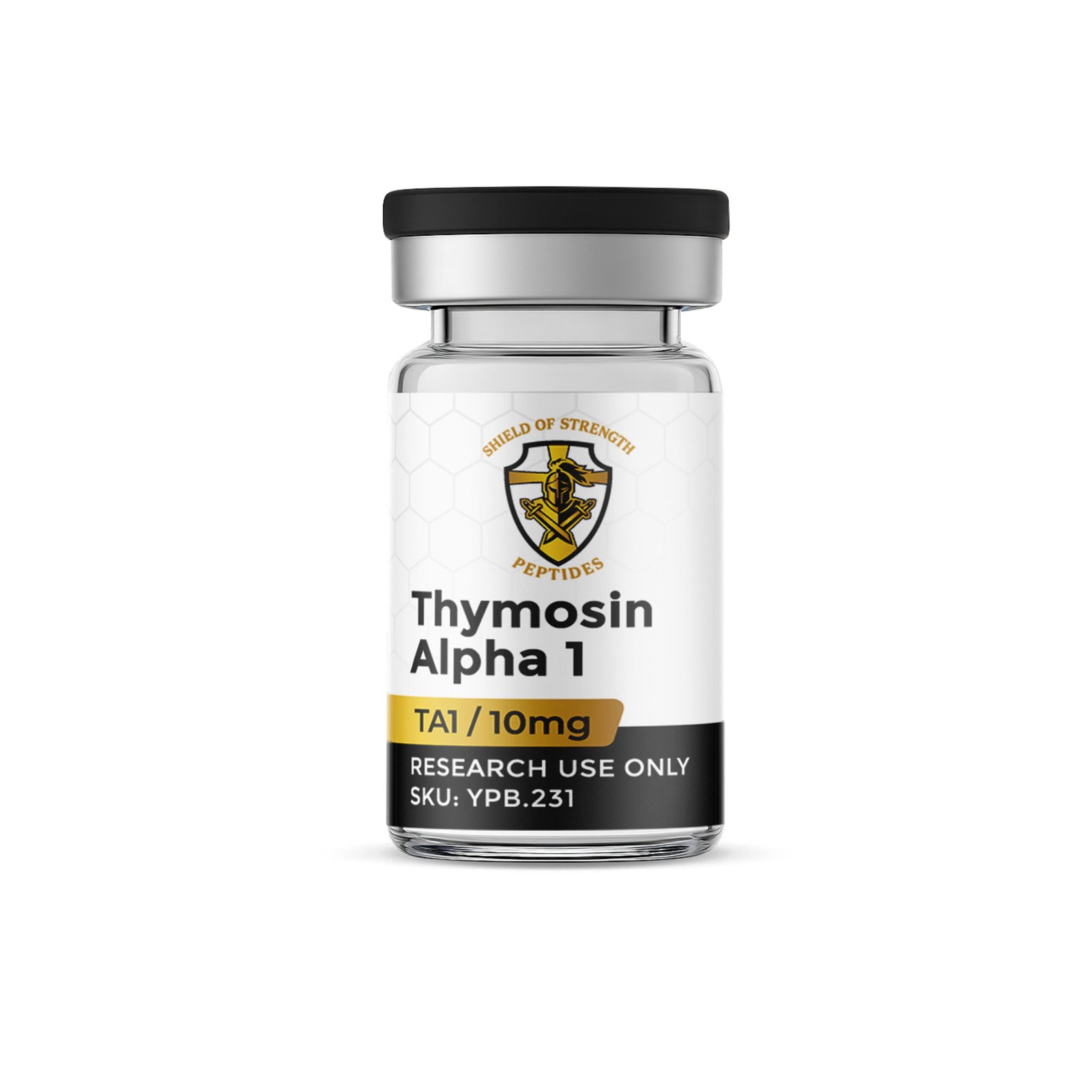
Thymosin Alpha 1 (TA1) – 10MG
Thymosin Alpha 1 (TA1) is a synthetic peptide derived from the human thymosin protein family. This peptide plays a role in immune system regulation, particularly in modulating immune cell activity, and has been investigated in preclinical studies for its potential applications in research environments. The 10MG formulation is presented in a research-use-only format, designed for laboratory and academic use only.
Research Context
Thymosin Alpha 1 (TA1) has garnered interest in the scientific community for its potential effects on immune responses, cytokine production, and cellular signaling pathways. As a small peptide hormone, TA1 is known for its ability to enhance the activity of natural killer (NK) cells, which are critical for targeting and destroying infected or cancerous cells. In research settings, TA1 has been explored for its role in modulating immune function, influencing inflammation, and potentially impacting cellular differentiation and proliferation in various biological models.
Research Overview
TA1 was originally isolated from calf thymus glands and has been extensively studied in preclinical research. Its biological activity primarily involves the stimulation of immune effector functions, including the enhancement of NK cell cytotoxicity. Studies have demonstrated that TA1 can enhance immune responses by promoting the production of interferon-gamma and other pro-inflammatory cytokines, which are essential for immune defense mechanisms. In vitro and in vivo research has also indicated potential applications in studying immune-related disorders, infectious diseases, and inflammatory conditions, although clinical translation remains beyond the scope of this research-use product.
Key Research Focus Areas
- Immune Modulation: TA1 has been investigated for its role in enhancing immune cell activity, particularly in the context of natural killer (NK) cell-mediated cytotoxicity and cytokine production.
- Inflammatory Responses: Research has explored TA1’s potential influence on inflammatory pathways, including its effects on the regulation of pro-inflammatory cytokines and immune cell activation.
- Antimicrobial Activity: TA1 has been studied in models of infection for its ability to modulate immune responses that may support antimicrobial defenses.
- Cellular Signaling and Differentiation: Preclinical studies have examined TA1’s role in cellular signaling pathways involved in immune cell differentiation, proliferation, and function.
- Neuroimmune Interactions: Emerging research suggests potential interactions between the immune system and nervous systems, with TA1 being explored in models of neuroimmune communication.
Research Restrictions and Compliance
This product is intended solely for research purposes in accredited academic or industrial research settings. It is not authorized for human or animal consumption, and it should not be used in any clinical, therapeutic, or cosmetic applications. Users are responsible for adhering to all applicable regulatory guidelines, ethical standards, and institutional policies governing research conduct. Failure to comply with these restrictions may result in legal consequences and the revocation of research permissions. For detailed regulatory information, consult the appropriate authorities or governing bodies in your region.
For research use only. Not for human or animal consumption.
Reviews
There are no reviews yet.