
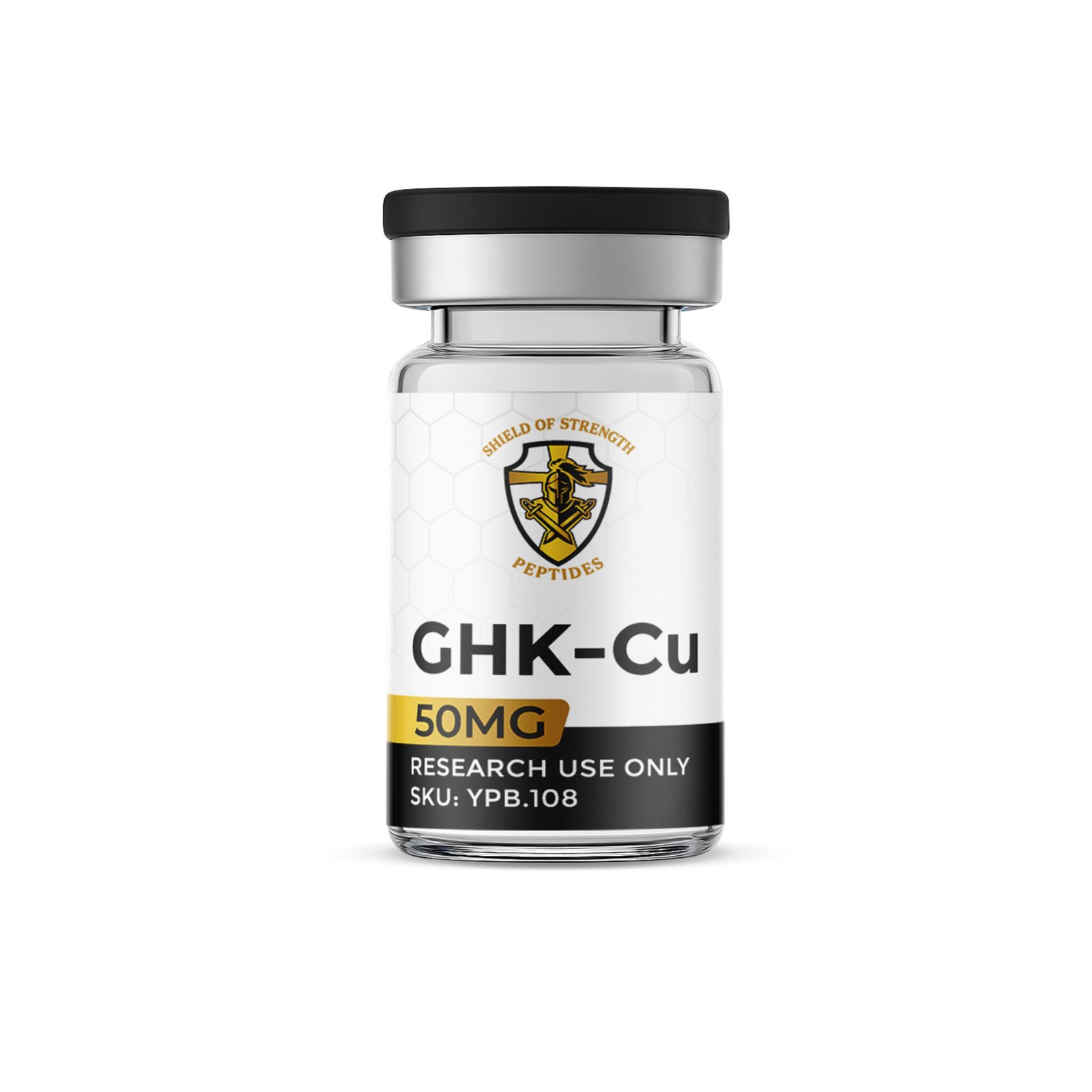
GHK-Cu Peptide
GHK-Cu, or growth differentiation factor 5 (GDF-5) fused to copper-binding peptide (GHK), is a synthetic peptide of interest in the scientific community for its potential applications in biochemical and biological research. This molecule is used in controlled experimental settings to study cell interactions, protein-protein binding, and potential mechanisms underlying biological processes.
Research Context
GHK-Cu has been studied primarily for its ability to bind copper ions (Cu²⁺), influencing cellular responses and protein interactions. The peptide is well-known in biochemical research for its use in studies involving extracellular matrix proteins, such as fibronectin, which plays a role in cell adhesion, migration, and wound healing. Research has shown that GHK-Cu can modulate these proteins through direct binding, which may be relevant to understanding fundamental cellular mechanisms.
Research Overview
GHK-Cu was first discovered in bovine serum but later synthesized for experimental use. Its copper-binding capability makes it a valuable tool for investigating the role of copper in biological systems. In research settings, GHK-Cu is often employed to study protein-protein interactions, cellular signaling pathways, and the structural dynamics of extracellular matrices. It is utilized in various biochemical assays, including ELISA (enzyme-linked immunosorbent assay), fluorescence microscopy, and surface plasmon resonance (SPR) to observe its effects on protein binding and cellular behavior.
Key Research Focus Areas
- Protein-Ligand Interactions: GHK-Cu has been utilized to investigate how it binds to extracellular matrix proteins, such as fibronectin, and its impact on cellular adhesion and migration.
- Copper Biology: The peptide serves as a tool to study the role of copper in biochemical pathways, including its effects on protein stability, enzymatic activity, and redox biology.
- Cellular Signaling: Research has explored GHK-Cu’s potential influence on signaling cascades involving matrix proteins, which may be relevant to processes like wound healing and tissue regeneration.
- Biochemical Assays: GHK-Cu is often employed in techniques such as SPR, ELISA, and fluorescence microscopy to quantify binding affinities and study dynamic interactions between proteins and other biomolecules.
- Model Systems: The peptide is used in both in vitro and in vivo experimental models to assess its effects on biological processes, including extracellular matrix remodeling and cell behavior in controlled conditions.
Important Compliance and Safety Notice
This product is intended for research purposes only and is not authorized for human or animal consumption. Researchers must adhere to all applicable regulatory guidelines and ethical standards when conducting experiments involving peptides. Proper handling and storage protocols are essential to maintain product integrity and ensure safety in experimental settings.
For research use only. Not for human or animal consumption.
| Size | 50MG, 100MG |
|---|

Reviews
There are no reviews yet.