
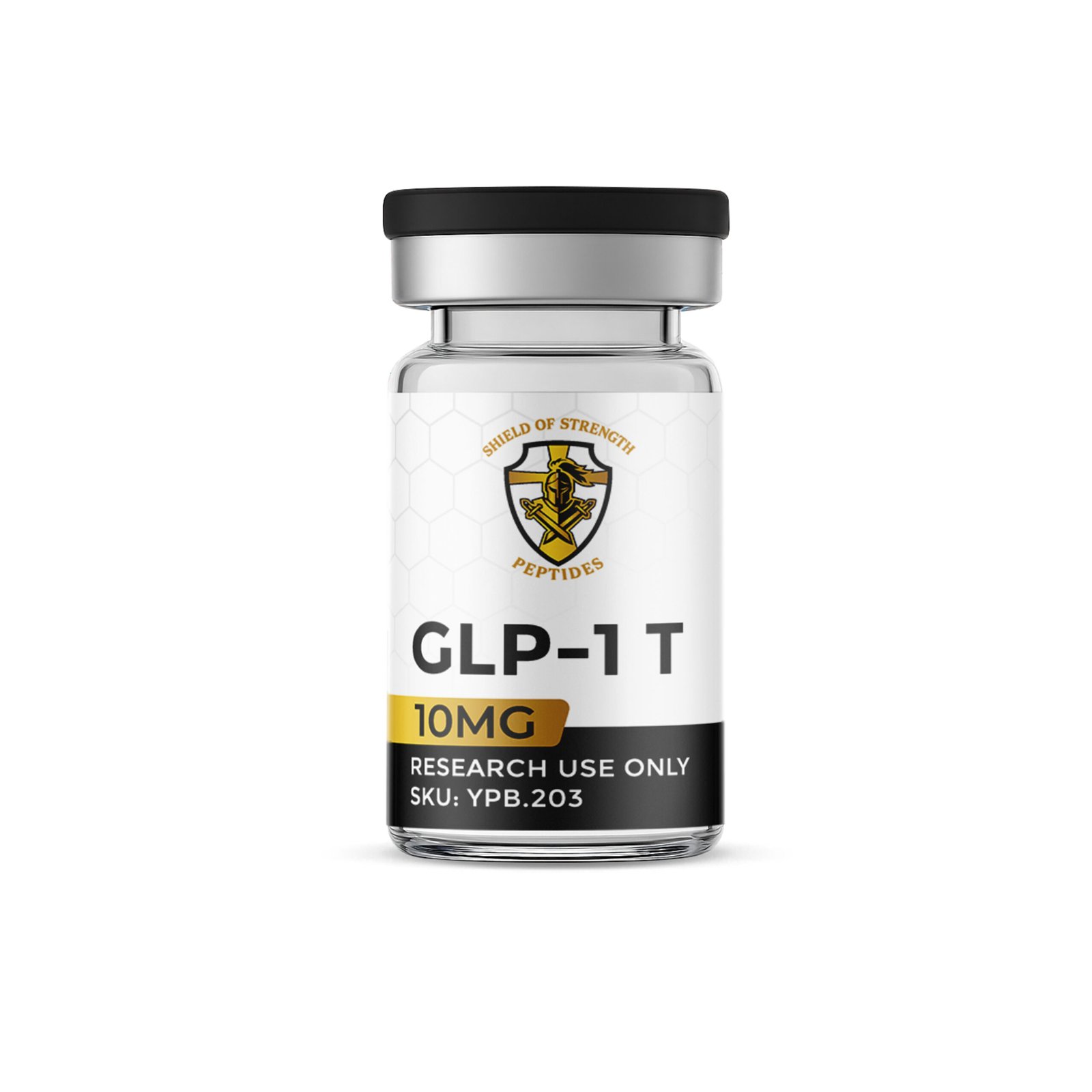
GLP-1 T
GLP-1 T is a synthetic analog of glucagon-like peptide-1 (GLP-1), a peptide hormone involved in glucose metabolism, appetite regulation, and gastrointestinal motility. Designed for academic and institutional research purposes, this peptide serves as a valuable tool for studying mechanisms underlying glucose homeostasis, pancreatic function, and related physiological processes.
Research Context
GLP-1, originally discovered for its role in insulin secretion, has since been explored for its broader effects on metabolic regulation, including reductions in appetite and body weight. While naturally occurring GLP-1 is highly potent and short-lived, synthetic analogs like GLP-1 T are engineered for improved stability and prolonged action in experimental settings. These analogs are instrumental in research aimed at understanding the therapeutic potential of GLP-1-based compounds and their biochemical interactions within biological systems.
Research Overview
GLP-1 T represents a critical advancement in peptide-based research tools, offering researchers a controlled and reproducible means to investigate the physiological and pharmacological properties of GLP-1. Due to its structural modifications, this peptide may exhibit distinct binding affinities to GLP-1 receptors and distinct metabolic outcomes compared to endogenous GLP-1. This peptide is particularly valuable for exploring the effects of GLP-1 analogs on diabetic models, obesity studies, and studies on gastrointestinal function.
Key Research Focus Areas
- Glucose Metabolism and Insulin Secretion: GLP-1 T is utilized to assess its impact on pancreatic beta-cell function, glucose tolerance, and insulin sensitivity in experimental animal models.
- Appetite Regulation and Energy Balance: Research may examine how GLP-1 T influences feeding behavior, satiety signals, and energy expenditure, providing insights into metabolic diseases.
- Gastrointestinal Motility and Secretory Processes: Studies often explore its effects on gut motility, fluid secretion, and hormone release, contributing to understanding gastrointestinal disorders.
- Therapeutic Analog Development: The peptide serves as a scaffold for designing novel GLP-1 analogs with enhanced potency or reduced side effects, relevant for potential future pharmaceutical applications.
- Comparative Pharmacology: GLP-1 T is often used alongside endogenous GLP-1 variants to compare receptor binding, pharmacokinetic profiles, and physiological outcomes in research settings.
Important Safety and Compliance Note
GLP-1 T must be handled with the utmost care, as its structural modifications may confer unique biological properties. Research institutions are advised to follow strict biosafety protocols, including proper disposal of unused peptide and contamination controls, to mitigate risks associated with peptide exposure or degradation products. This peptide is intended solely for academic research, experimental analysis, and non-clinical applications.
For research use only. Not for human or animal consumption.
| Size | 10MG, 20MG, 30MG, 40MG, 50MG, 60MG |
|---|




Reviews
There are no reviews yet.