
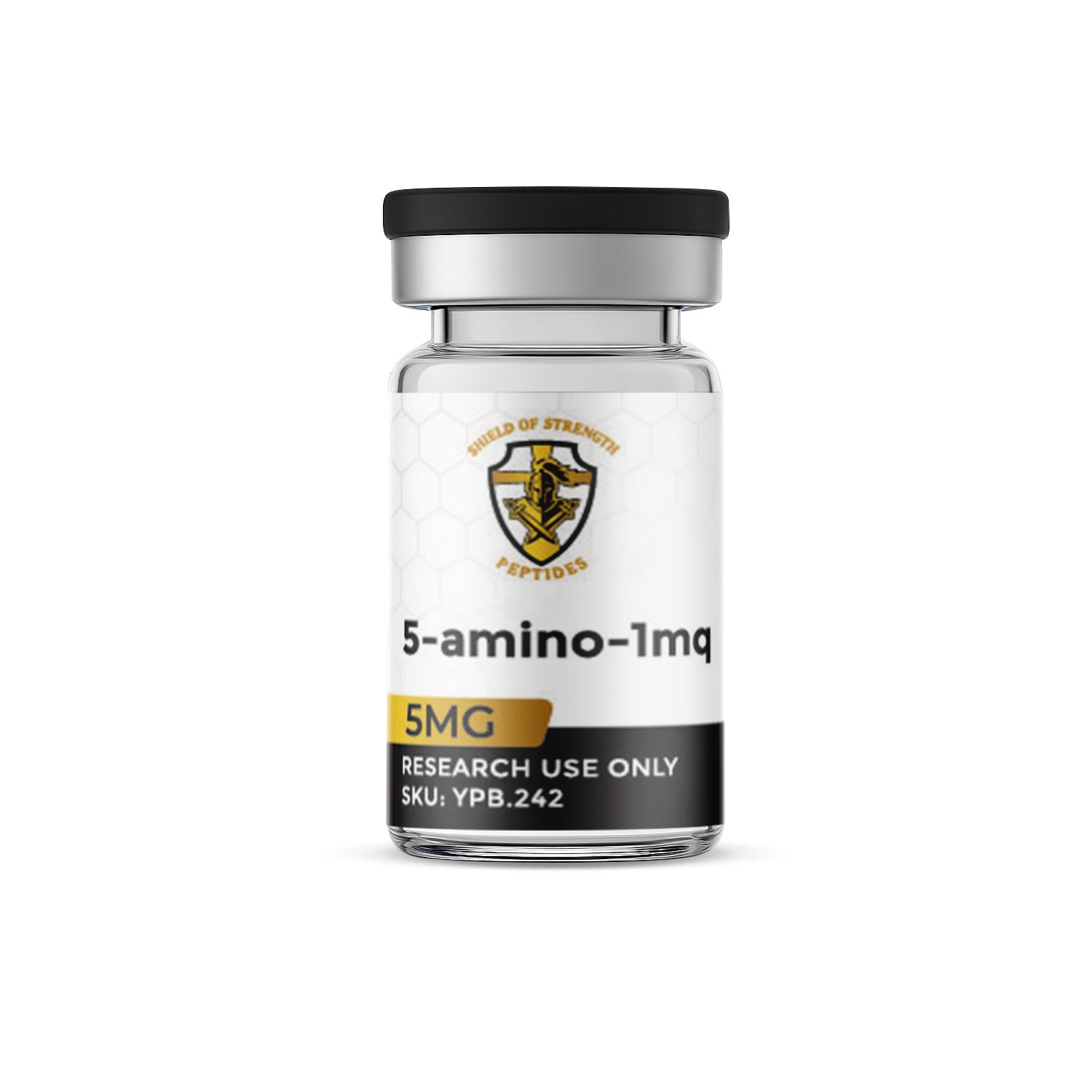
5-Amino-1MQ
5-Amino-1-methylquinolinium dihydrochloride (5-amino-1MQ) is a synthetic compound under investigation within the field of peptide-based chemistry for its potential role in studying nitric oxide (NO) signaling pathways, mitochondrial function, and related biological processes. This product is intended exclusively for academic, institutional, and research purposes where its properties can be systematically analyzed.
Research Context
1MQ derivatives, including 5-amino-1MQ, have been explored in biochemical and pharmacological studies for their ability to modulate nitric oxide metabolism. The compound serves as a substrate or inhibitor in various biochemical assays, particularly those assessing NO synthase activity, mitochondrial bioenergetics, or redox-sensitive signaling cascades. Its structural modifications enable targeted engagement in cellular environments, making it a valuable tool for mechanistic investigations in both mammalian and model systems.
Research Overview
5-Amino-1MQ is synthesized via functionalization of the quinoline scaffold, introducing an amino group at the fifth position. This structural modification allows for enhanced solubility and metabolic stability compared to parent compounds, facilitating its use in long-duration biochemical experiments. Research applications may include:
- In vitro studies of nitric oxide synthase activity and regulation.
- Investigations into mitochondrial respiration and reactive oxygen species (ROS) production.
- Assays evaluating antioxidant or pro-oxidant properties in cellular models.
- Cross-disciplinary studies combining peptide chemistry with redox biology.
Key Research Focus Areas
- Nitric Oxide Signaling: 5-Amino-1MQ may be utilized to probe substrate specificity of NO synthases, including eNOS, iNOS, and nNOS isoforms, under controlled conditions. This helps elucidate mechanisms of NO-dependent physiological responses.
- Mitochondrial Dynamics: The compound can be employed in assays assessing mitochondrial respiration, membrane potential, and ROS generation, particularly in conjunction with fluorescent probes or enzymatic assays.
- Redox Biology: Its ability to generate or scavenge reactive species makes it suitable for studies on oxidative stress, antioxidant defense, and redox-sensitive transcription factors (e.g., NF-κB, AP-1).
- Structural and Biophysical Studies: Structural modifications of 1MQ derivatives facilitate the investigation of binding interactions with proteins, nucleic acids, or lipid membranes via NMR spectroscopy, X-ray crystallography, or molecular dynamics simulations.
Researchers utilizing 5-Amino-1MQ in experimental settings must adhere to strict safety protocols, as the compound is a potential irritant or sensitizer. Proper handling includes the use of fume hoods, appropriate personal protective equipment (PPE), and compliance with institutional biosafety guidelines.
For research use only. Not for human or animal consumption.
| Size | 5MG, 50MG |
|---|
Reviews
There are no reviews yet.