
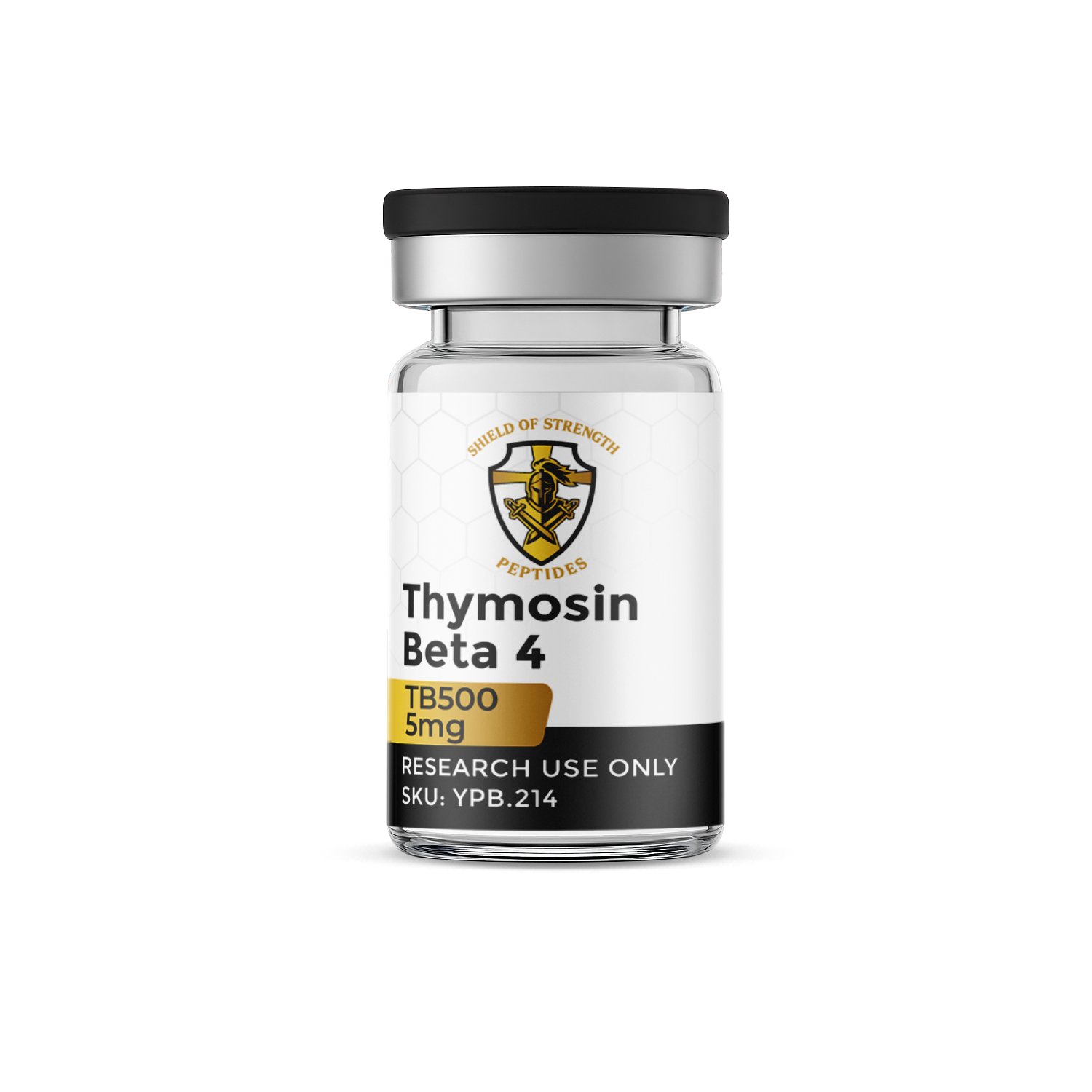
Thymosin Beta 4
Thymosin Beta 4 (Tβ4) is a peptide derived from the natural protein thymosin β-4, a key component of the extracellular matrix. As a research-use-only compound, it is primarily studied for its potential biological effects on cellular repair, wound healing, and regenerative processes. This description provides an overview of its scientific relevance within research applications.
Research Context
Thymosin β-4 is a small, naturally occurring peptide (13 amino acids) that has attracted significant interest in scientific research due to its potential role in modulating cellular responses. Originally identified as a protein in the thymus gland, it was later isolated and characterized for its ability to promote cellular migration, survival, and regeneration under controlled experimental conditions.
Research Overview
Tβ4 has been extensively studied in vitro and in preclinical models for its capacity to enhance tissue repair, reduce inflammation, and support regenerative processes. Its effects are not specific to a single biological pathway but are often observed in the context of cellular environments where damage or stress induces a reparative response. Research findings emphasize its potential utility in exploring mechanisms underlying wound healing, cardiovascular repair, and neuroprotection.
Key Research Focus Areas
- Cellular Repair Mechanisms – Investigation into how Tβ4 influences cytoskeletal reorganization, cellular migration, and tissue regeneration in damaged or diseased tissues.
- Wound Healing – Examination of its role in accelerating epithelialization, granulation tissue formation, and scar reduction in preclinical models of injury.
- Regenerative Biology – Exploration of Tβ4’s potential in cardiac repair, neural regeneration, and organ-specific regeneration studies (e.g., liver or skin models).
- Anti-Inflammatory and Anti-Apoptotic Effects – Analysis of its modulatory impact on inflammatory pathways and cellular stress responses in experimental settings.
- Extracellular Matrix Dynamics – Study of Tβ4’s interaction with matrix proteins and its influence on extracellular environment remodeling during repair processes.
Safety and Compliance Considerations
Thymosin β-4 is intended exclusively for use in research laboratories to study its biological properties. Due to its potential for unintended systemic effects or interactions with experimental protocols, strict adherence to laboratory protocols is required. Researchers must ensure proper handling, storage, and disposal in compliance with institutional safety guidelines. This material should never be introduced into living organisms or used outside of authorized academic or institutional research environments.
For research use only. Not for human or animal consumption.
| Size | 5MG, 10MG |
|---|
Reviews
There are no reviews yet.