
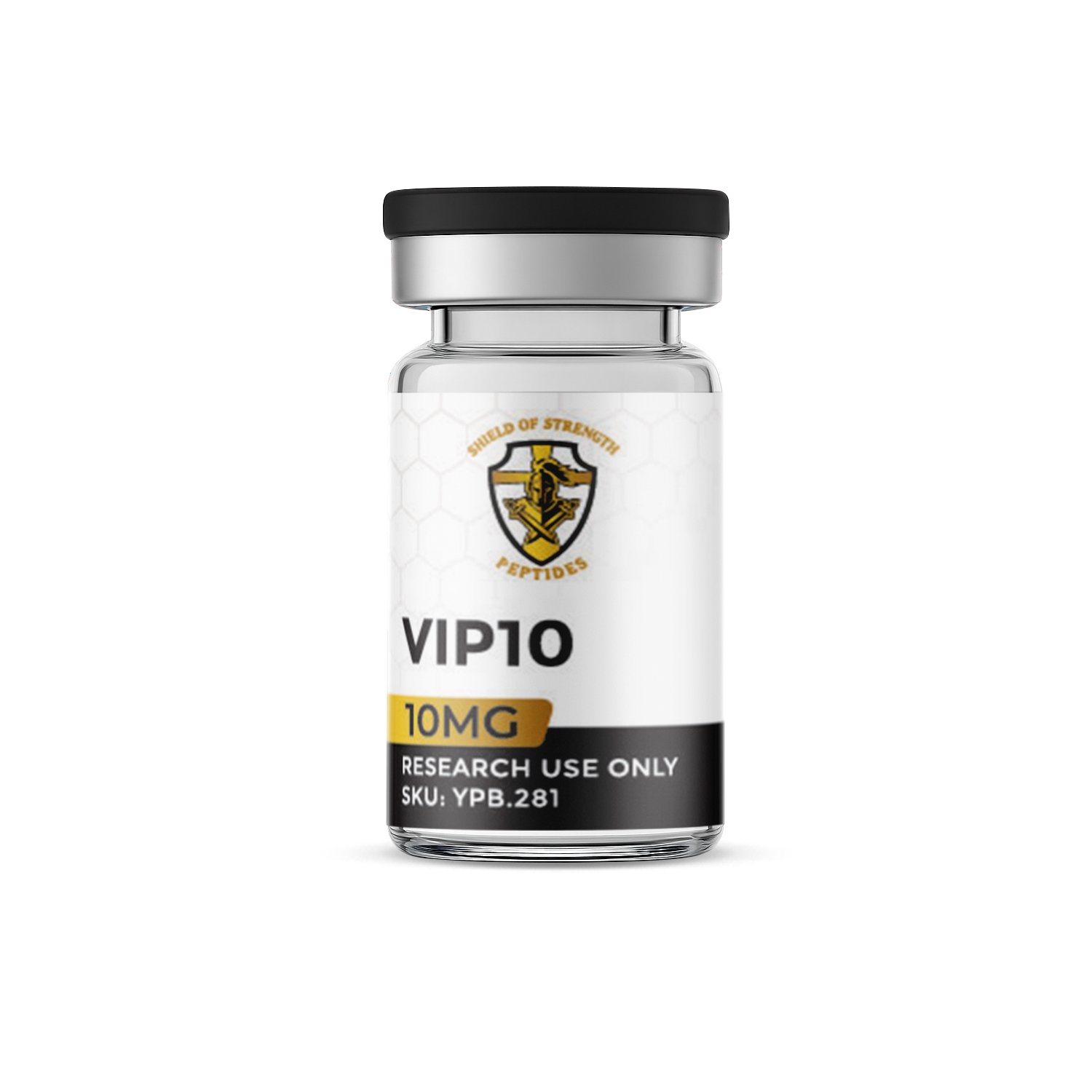
VIP10 10MG
VIP10 is a synthetic peptide derivative of vasoactive intestinal peptide (VIP), an endogenous neuropeptide known for its regulatory roles in physiological processes. This research-use-only peptide is designed for academic and laboratory applications in pharmacological, biochemical, or neurobiological investigations. Its structural modifications facilitate specific experimental studies while maintaining compatibility with existing biochemical assays.
Research Context
Vasoactive intestinal peptide (VIP) is a multifunctional neuropeptide that influences a variety of physiological pathways, including neurotransmission, endocrine regulation, and vascular tone. VIP10, a truncated or modified analog, is intended for use in research settings to explore its potential interactions with receptor systems, signal transduction mechanisms, or cellular responses under controlled experimental conditions. This peptide can serve as a tool to study VIP receptor binding affinities, downstream signaling pathways, or pharmacological effects in vitro and in vivo models.
Research Overview
VIP10 is characterized by its synthetic formulation, which preserves key amino acid sequences while optimizing solubility and stability for laboratory applications. Given its structural resemblance to native VIP, it is often utilized in studies focused on receptor engagement, competitive inhibition assays, or functional characterization of VIP receptor subtypes (e.g., VPAC1 and VPAC2). Researchers may employ VIP10 in pharmacological profiling, cellular transduction assays, or molecular docking studies to investigate peptide-receptor interactions.
Key Research Focus Areas
- Receptor Binding Affinity: Evaluation of VIP10’s ability to compete with or activate VIP receptors, including its specificity for VPAC1 and VPAC2 subtypes.
- Signal Transduction Studies: Investigation of downstream cellular responses, such as cAMP production, calcium signaling, or transcriptional activation, in response to VIP10-mediated receptor engagement.
- Pharmacological Profiling: Comparison of VIP10’s effects against native VIP or other related peptides (e.g., PACAP) to assess structural-activity relationships in vitro.
- Biochemical Assays: Use in enzyme-linked immunosorbent assays (ELISA), radioligand binding assays, or fluorescence polarization binding studies to quantify peptide-receptor interactions.
- Neurobiological Investigations: Exploration of VIP10’s potential roles in neuronal signaling, synaptic plasticity, or stress responses, particularly in experimental animal models.
Important Safety and Compliance Notice
VIP10 is intended solely for research and academic use in accredited laboratory environments. This peptide is not approved for human or animal consumption, therapeutic applications, or any form of commercial or non-research purposes. Researchers must adhere to strict ethical guidelines, local regulations, and institutional policies governing peptide use. Proper handling, storage, and disposal procedures must be followed to ensure safety and compliance with relevant safety data sheets (SDS) or institutional protocols.
For research use only. Not for human or animal consumption.
Reviews
There are no reviews yet.